

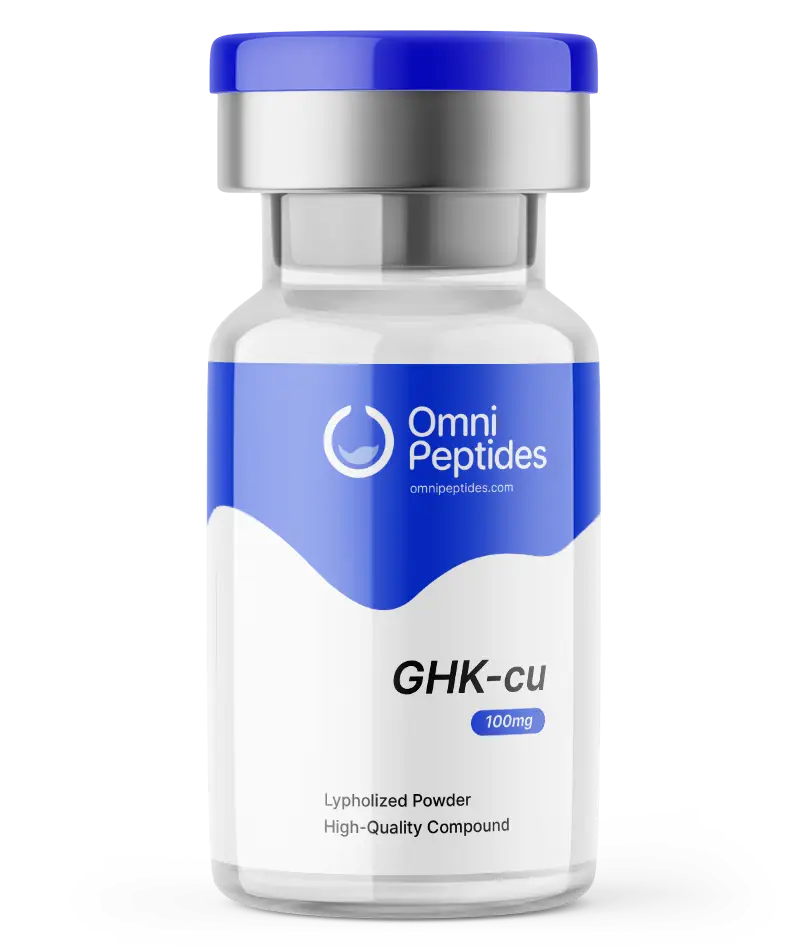
GHK-Cu Product Overview
GHK-Cu (glycyl-L-histidyl-L-lysine copper(II) complex) is a naturally occurring copper-binding tripeptide first isolated from human plasma albumin by Loren Pickart in 1973. CAS: 89030-95-5. MW: 401.91 Da. Present in plasma, saliva, and urine, plasma levels decline with age, from approximately 200 ng/mL at age 20 to 80 ng/mL at 60.
The Cu(II) ion is coordinated in square-pyramidal geometry by the glycine amino-terminus, the amide nitrogen of the Gly-His peptide bond, and the histidine imidazole ring. This copper coordination is integral to GHK-Cu's biological activity, distinguishing it from copper-free GHK free acid.
GHK-Cu's most documented property is the breadth of gene expression modulation. Pickart and Margolina (2018) reported that GHK-Cu modulates approximately 31% of human genes, including pathways tied to collagen and elastin synthesis, angiogenesis, antioxidant defense, DNA repair, and inflammatory signaling.
Supplied strictly for in vitro and preclinical laboratory research use only.